Random facts about space
Prepare to be amazed by the mysteries hidden within planets and beyond, designed for both new explorers and seasoned stargazers alike.

Random facts about pluto (aka why it’s secretly the best planet)
okay first of all, yes, i know Pluto isn’t technically a planet anymore. i’m choosing to ignore that for emotional reasons.
1. Pluto is TINY smaller than Earth’s moon but still managed to build its own weird little system with moons like Charon, which is so big compared to Pluto that they basically orbit each other like a duo instead of a normal planet-moon situation.
2. a day on Pluto lasts about 6.4 Earth days, which means sunsets there would take forever and honestly sound kind of peaceful.
3. it has mountains made of water ice that are as hard as rock because it’s so cold. like, actual ice mountains just casually existing.
4. (the best part) there’s strong evidence that Pluto might have a warm, deep ocean of liquid water hidden beneath its icy surface. which is insane because it’s so far from the Sun, but internal heat (and maybe antifreeze-like chemicals) could keep it from freezing solid. (If the multiverse exists I am alien memaid on pluto in a universe)
5. also, it has that iconic heart-shaped region (Tombaugh Regio), which just feels like Pluto trying to win people over after being demoted. my poor baby.
so why is Pluto the best “planet”? because it’s weird, underestimated, and way more complex than anyone expected. it’s out there doing its own thing at the edge of the solar system, possibly hiding an ocean, and honestly… that’s kind of iconic.
deep dive: the gas giants (and why uranus is almost as perfect as pluto)
okay so the gas giants are basically the overachievers of the solar system. they’re huge, chaotic, and kind of dramatic compared to the smaller rocky planets. we’re talking Jupiter, Saturn, Uranus, and Neptune—each one doing something weird enough to deserve its own personality.
1. Jupiter is the giant of giants. it’s so massive it could fit all the other planets inside it combined and still have room left. it’s basically a failed star, constantly stormy, with the Great Red Spot raging for centuries like it has something personal against physics.
2. Saturn… okay, i know people love it, but i’m not emotionally invested. sure, it has rings, but it gets way too much attention for them. like yes, they’re pretty, but so are other things in the universe that don’t get nearly as much hype.
3. Neptune is the chaotic distant cousin. super far away, deep blue, and home to some of the fastest winds we’ve ever seen—like, faster than anything on Earth by a lot. it’s cold, dark, and kind of intense.
and then there’s Uranus. 4. Uranus is… different. first of all, it’s tilted at about 98 degrees, which basically means it’s rolling around the Sun on its side like it just gave up on normal rotation. seasons there last over 20 years, so it goes through these long, extreme periods of light and darkness.
it also has 13 RINGS, which people don’t talk about enough because Saturn gets all the attention. they’re darker and more subtle, but honestly that just makes them cooler. like understated, mysterious energy. and unlike Jupiter and Saturn (which are true gas giants), Uranus is technically an ice giant made of heavier elements like water, ammonia, and methane. that methane is what gives it that soft blue-green color, which is honestly one of the prettiest shades in the solar system.
also, and this is very important to me personally: Uranus might have a weird, slushy interior where water isn’t just ice or liquid but something in between under extreme pressure. not exactly Pluto’s hidden ocean vibe, but still very “there’s more going on here than you think.”


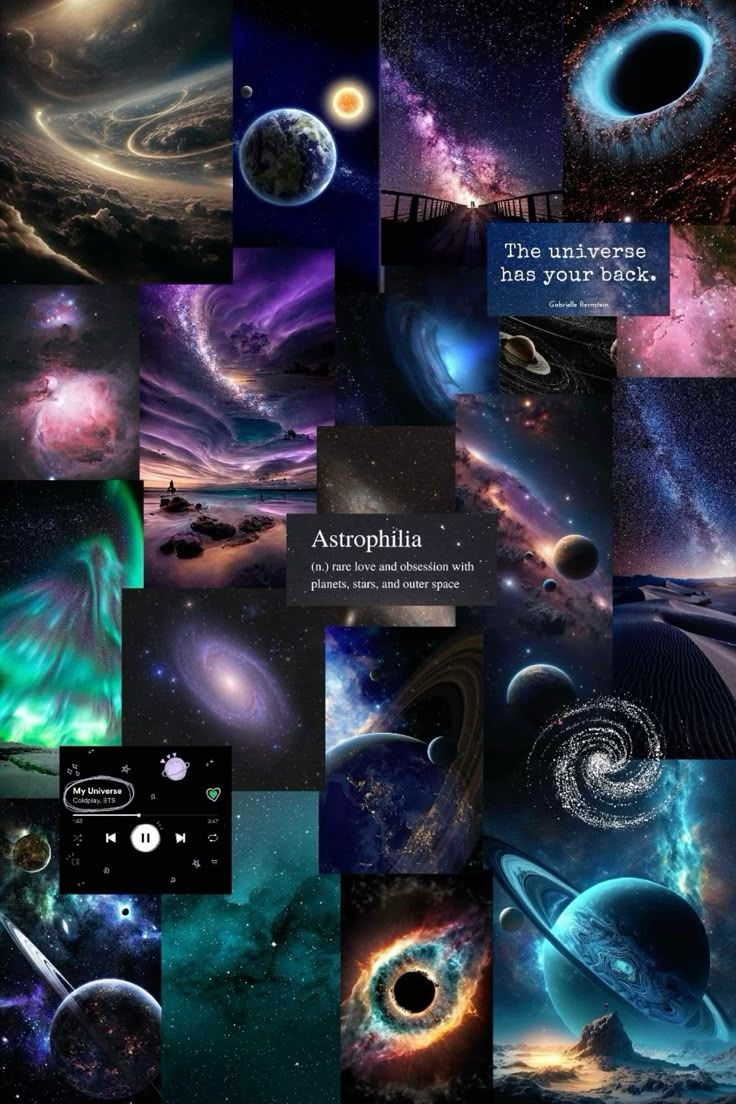
Random space facts i think about way too often
- space isn’t actually completely silent there are electromagnetic vibrations that can be converted into sound, which means planets like Jupiter basically have their own eerie “noise” if you translate it.
- a day on Venus is longer than a year on Venus. it rotates so slowly that it takes more time to spin once than to orbit the Sun, which just feels unnecessary.
- neutron stars are so dense that a teaspoon of one would weigh billions of tons. like… i can’t even process that properly.
- there are more stars in the universe than grains of sand on all the beaches on Earth. every time i remember that, my brain just kind of gives up.
- astronauts can grow slightly taller in space because their spines stretch out without gravity compressing them. imagine going to space and coming back like “i’m 2cm taller now.”
- Saturn isn’t the only planet with rings (which i will keep reminding people), and some of them are way fainter and harder to see.
- if you fell into a black hole, from your perspective you’d just keep falling, but to someone watching you, you’d appear to slow down and freeze at the edge. physics really said “let’s break reality.”
- and finally: the light we see from distant stars is basically looking back in time. some of those stars might not even exist anymore, and we’re just now seeing their past.